For up-to-date news on Comet ISON checkout the website
Comet ISON live blog | The Planetary Society

Wednesday, 27 November 2013


Tuesday, 2 April 2013
Comet PanStarrs at last!
Clear skies finally arrived after a month of poor weather. At about 8:30 I ran out to the nearby garages and placed my camera and small tripod on the roof of my car, pointed it in the general drection of where I thought was the comet and shot off four or so 30sec exposures. I used an IDAS light pollution filter on a 24-42mm 4/3 micro lens, Panasonic Lumix gf3 camera.
Spent about an hour looking at the images and processing them on my PC along with a deep sky location map of the comet from the web.
Managed to track down the exact loaction of the comet. By jove I have it on the image!

The comet is near the triangle of stars towards the bottom left of the image. Near the top center of the image, directly up from the comet is the Andromeda Galaxy.
- Posted using BlogPress from my iPad
Spent about an hour looking at the images and processing them on my PC along with a deep sky location map of the comet from the web.
Managed to track down the exact loaction of the comet. By jove I have it on the image!

The comet is near the triangle of stars towards the bottom left of the image. Near the top center of the image, directly up from the comet is the Andromeda Galaxy.
- Posted using BlogPress from my iPad
Friday, 15 February 2013
A close shave! Asteroid near miss tonight.
Asteroid set for record near-miss http://www.bbc.co.uk/news/science-environment-21442863
Tuesday, 1 January 2013
Stargazing Live 2013
Happy New Year!

Stargazing Live is upon once again and its bigger than ever.
Events are taking place all over the country. Check the BBC website to find out what events are happening in your local area.
I am a member of Loughton Astronomical Society and they will be holding events to coincide with the screening of the Stargazing Live third series. Check out our web pages for event details over the coming weeks.
Thanks
Martin

Stargazing Live is upon once again and its bigger than ever.
Events are taking place all over the country. Check the BBC website to find out what events are happening in your local area.
I am a member of Loughton Astronomical Society and they will be holding events to coincide with the screening of the Stargazing Live third series. Check out our web pages for event details over the coming weeks.
Thanks
Martin
Sunday, 9 December 2012
RIP Patrick Moore!
A personal account of a great personal astronomer.
It is very sad news to hear the passing of Sir Patrick Moore, one of the most popular UK astronomers of the past sixty years.He inspired a generation to pursue astronomy as a hooby. So many people I have spoken to over the years have said that they never would have taken up the hobby seriously or even professionally if it wasn't for Patrick, either through his popular TV prgogramme "The Sky at Night" or the myriad of book he has written.
If it wasn't for Springer's Practical Astronomy series endorsed by Patrick, I would have never have had my book published. In fact, I have been told that my book is in his library along with others that are part of the astronomy series. Truly inspiring!
 |
| Patrick with my book 25th September 2009. Herstmonceux. |

I even visited Patrick's house once back in 1985 when I was on vacation in Selsey. I was taken round his telescopes in his garden by a dear friend of his, Reg Spry. Patrick wasn't actually in at the time but he said that if I was ever down in Selsey to let him know, such was the approachable and friendly nature of the man.
It was a true honor to have known Patrick Moore. He will be greatly missed.
Martin
Saturday, 27 October 2012
Equinox SkyCamp 2012
September heralds the onset of Autumn, longer nights and of course the equinox skycamp up in Kelling Heath, Norfolk. The main weekend dates this year were Friday 14th to Monday 17th.
This year it was just myself, leaving the family back at home. Of course my 'other family' (telescope, tent and equipment) all came with!
A New Tent
This year I decided on investing a better tent to store my equipment and have somewhere to sit down at the laptop. The past few utility tents simply broke when I tried to put them up. What I wanted was something that I could put up in minutes but was robust enough to last many years.
Visiting a local camping equipment outlet, I managed to find the perfect solution, the insta-tourer4. More squat than a utility tent, but easy to set up in minutes. Trying it out in the garden, it certainly was easier to set up and take down, perfect for skycamp.

Equipment
Just like the past few years I set up the wifi system. The wifi network consists of a Belkin USB network hub connected to a Dlink wifi router, hence almost any USB device attached to the Belkin box can be controlled wirelessly.
Both the Autostar (via a Serial to USB adaptor) and the motor focuser (via a shoestring astronomy USB adaptor) were controlled wirelessly from my laptop.
This year I just took the six inch LXD55 AR6 refractor as I was only staying for two nights. I also brought along a new two inch eyepiece - a Vixen lanthanum 42mm which I purchased earlier this year at Astrofest.

New Camera
Earlier this year I upgraded my digital camera. I purchased a Panasonic Gf3 Micro 4/3 camera with two lenses. Now, the great thing about this camera is that it has interchangeable lenses. This means that with the right adaptors you can hook it up to a telescope, as well as attach other non-Panasonic lenses. So rather than purchase specialised Panasonic-only adaptors, I simply got a 4/3 micro to Olympus OM adaptor (purchased from a company called GRB Griturn). This meant that all my Olympus lenses and telescope adaptors were resurrected and could be used again.
Earlier this year (see post) I used the GF3 to take shots of Venus, Jupiter and Moon conjunction. The camera has a full manual mode but unfortunately no B (Bulb) setting so the maximum exposure length of time it can be set to is only one minute. However, this should still be long enough to capture various deep sky objects with a view to stacking multiple shots together in order to bring out more detail.
Friday
Despite the windy conditions when I arrived at Kelling in the mid-afternoon, the tent was set up in just a few minutes with nothing broken this time! The rest of the equipment was setup and I was ready for hopefully two nights of observing.
It wasn't until after 10pm when the skies eventually cleared and the scope setup procedure completed ready for a night's viewing. After spending a few hours observing I decided to try out imaging with the camera.
Armed with an accurately polar aligned telescope, remote control via a laptop, a planetarium program and the new camera, I set out to capture various celestial objects.
To start off with I took a few shots piggyback on the telescope. Just one minute later I saw the results... the Milky Way captured on the screen. That's is what so great with digital cameras nowadays, you don't have to wait until you get the results back from a photo shop days later!
I then turned to prime focus imaging. First I found a bright star Aldebaran, then using a handy 'live view' utility on the camera, I focussed on the star using the motorised focus handset, an essential piece of equipment for anyone attempting to take images of the night sky.
To start off with I thought I would try a bright star cluster. The Pleiades were rising in the East so I pointed the telescope towards it, aligned the stars up in the camera viewfinder and fired off a one minute shot. I currently do not possess a remote camera controller, so to reduce camera shake I set the self-timer facility to two seconds. This was sufficiently long enough for the telescope to stop vibrating before the image was taken.
Saturday
The main event day is usually an eventful day, trade stands in the yellow field and talks going on throughout the afternoon. In the early evening the prize raffle took place, which is always popular amongst attendees of the camp.
It looked like the skies were going to be clear from early evening, so after an hour or so resting in the lodge, it was time to go out to the field.
From the previous night's successful camera setup, I was ready to take on the deep sky objects. I proceeded to image a number of deep sky objects. Some of these objects did not show up very well on the camera view screen so I could not see if they were in camera field of view. The technique I adopted was to take a one minute test shot and see if the object was captured in the camera's field of view. If the object was not central then I would guess which direction I needed to move the scope via the Autostar handset then take another shot until I was satisfied with the result. I would then proceed to take about five one minute shots before moving on to the next object. The images have been processed.
Jupiter was rising ever-higher in the East so I decided to try out my set up on the planet instead of using my ToUcam.
At just prime focus (f8) Jupiter's disc was tiny, so I attempted to pump up the power. Unfortunately what was missing from my equipment itinerary was a high power barlow like a 4x powermate. So with my current equipment, I attached a two inch 2x two inch Barlow, another 1.5x one and a quarter inch Barlow, plus the prime focus adaptor and the camera adaptor. Amazingly I had enough length to rack the focuser back in order to get the planet in focus. Given the number of attachments and the length of the rack, the camera was almost a whole 12 inches back from the end of the telescope. Luckily the balance of the scope wasn't too much affected and Jupiter still tracked nicely in the camera's field of view.
With the rising of Orion looming through the trees I took a few shots of M42 and a couple of piggyback shots. It was time to call it a night.
On the whole it was a very successful and fulfilling two nights of Astronomy and was looking forward to start processing my images over the next few months.
Sunday
It was time for the long journey home, but not before in the afternoon strolling down to a local cafe for lunch with friends and rambling to nearby Weyborne beach.

To summarise it was a great skycamp, probably one sof the most successful for many years in terms of organising (well done Loughton AS) ... oh and of course the clear nights!
This year it was just myself, leaving the family back at home. Of course my 'other family' (telescope, tent and equipment) all came with!
A New Tent
This year I decided on investing a better tent to store my equipment and have somewhere to sit down at the laptop. The past few utility tents simply broke when I tried to put them up. What I wanted was something that I could put up in minutes but was robust enough to last many years.
Visiting a local camping equipment outlet, I managed to find the perfect solution, the insta-tourer4. More squat than a utility tent, but easy to set up in minutes. Trying it out in the garden, it certainly was easier to set up and take down, perfect for skycamp.
Equipment
Just like the past few years I set up the wifi system. The wifi network consists of a Belkin USB network hub connected to a Dlink wifi router, hence almost any USB device attached to the Belkin box can be controlled wirelessly.
Both the Autostar (via a Serial to USB adaptor) and the motor focuser (via a shoestring astronomy USB adaptor) were controlled wirelessly from my laptop.
This year I just took the six inch LXD55 AR6 refractor as I was only staying for two nights. I also brought along a new two inch eyepiece - a Vixen lanthanum 42mm which I purchased earlier this year at Astrofest.
New Camera
Earlier this year I upgraded my digital camera. I purchased a Panasonic Gf3 Micro 4/3 camera with two lenses. Now, the great thing about this camera is that it has interchangeable lenses. This means that with the right adaptors you can hook it up to a telescope, as well as attach other non-Panasonic lenses. So rather than purchase specialised Panasonic-only adaptors, I simply got a 4/3 micro to Olympus OM adaptor (purchased from a company called GRB Griturn). This meant that all my Olympus lenses and telescope adaptors were resurrected and could be used again.
Earlier this year (see post) I used the GF3 to take shots of Venus, Jupiter and Moon conjunction. The camera has a full manual mode but unfortunately no B (Bulb) setting so the maximum exposure length of time it can be set to is only one minute. However, this should still be long enough to capture various deep sky objects with a view to stacking multiple shots together in order to bring out more detail.
Friday
Despite the windy conditions when I arrived at Kelling in the mid-afternoon, the tent was set up in just a few minutes with nothing broken this time! The rest of the equipment was setup and I was ready for hopefully two nights of observing.
It wasn't until after 10pm when the skies eventually cleared and the scope setup procedure completed ready for a night's viewing. After spending a few hours observing I decided to try out imaging with the camera.
Armed with an accurately polar aligned telescope, remote control via a laptop, a planetarium program and the new camera, I set out to capture various celestial objects.
To start off with I took a few shots piggyback on the telescope. Just one minute later I saw the results... the Milky Way captured on the screen. That's is what so great with digital cameras nowadays, you don't have to wait until you get the results back from a photo shop days later!
 |
| M31 and Cassiopeia Area |
 |
| Perseus Area |
 |
| Cygnus Area |
 |
| Jupiter and Hyades - Taurus |
To start off with I thought I would try a bright star cluster. The Pleiades were rising in the East so I pointed the telescope towards it, aligned the stars up in the camera viewfinder and fired off a one minute shot. I currently do not possess a remote camera controller, so to reduce camera shake I set the self-timer facility to two seconds. This was sufficiently long enough for the telescope to stop vibrating before the image was taken.
 |
| Pleiades M45 |
Saturday
The main event day is usually an eventful day, trade stands in the yellow field and talks going on throughout the afternoon. In the early evening the prize raffle took place, which is always popular amongst attendees of the camp.
It looked like the skies were going to be clear from early evening, so after an hour or so resting in the lodge, it was time to go out to the field.
From the previous night's successful camera setup, I was ready to take on the deep sky objects. I proceeded to image a number of deep sky objects. Some of these objects did not show up very well on the camera view screen so I could not see if they were in camera field of view. The technique I adopted was to take a one minute test shot and see if the object was captured in the camera's field of view. If the object was not central then I would guess which direction I needed to move the scope via the Autostar handset then take another shot until I was satisfied with the result. I would then proceed to take about five one minute shots before moving on to the next object. The images have been processed.
 |
| NGC 887 - Perseus Double Cluster |
 |
M27 - Dumbbell Nebula - Vulpecular
|
 |
| Eastern Veil (NGC!!!!) - Cygnus |
 |
| M31 - Andromeda Galaxy - Andromeda |
 |
| M1 - Crab Nebula - Taurus |
 |
| M42 - Orion Nebula - Orion |
Jupiter was rising ever-higher in the East so I decided to try out my set up on the planet instead of using my ToUcam.
At just prime focus (f8) Jupiter's disc was tiny, so I attempted to pump up the power. Unfortunately what was missing from my equipment itinerary was a high power barlow like a 4x powermate. So with my current equipment, I attached a two inch 2x two inch Barlow, another 1.5x one and a quarter inch Barlow, plus the prime focus adaptor and the camera adaptor. Amazingly I had enough length to rack the focuser back in order to get the planet in focus. Given the number of attachments and the length of the rack, the camera was almost a whole 12 inches back from the end of the telescope. Luckily the balance of the scope wasn't too much affected and Jupiter still tracked nicely in the camera's field of view.
 |
| Jupiter |
 |
| Orion |
On the whole it was a very successful and fulfilling two nights of Astronomy and was looking forward to start processing my images over the next few months.
Sunday
It was time for the long journey home, but not before in the afternoon strolling down to a local cafe for lunch with friends and rambling to nearby Weyborne beach.

To summarise it was a great skycamp, probably one sof the most successful for many years in terms of organising (well done Loughton AS) ... oh and of course the clear nights!
Sunday, 7 October 2012

Sunday, 26 August 2012
Neil Armstrong - Final Frontier Man!
It is with great sadness to hear about Neil Armstrong, who passed away aged 82 on Saturday 25th August 2012. Armstrong touched places where no human had ever touched. He and his colleague Edwin 'Buzz' Aldrin were the first to walk on another world, a quarter of a million miles away.
When the two astronuats landed on the surface of the Moon, July 20th 1969, someone had to be first and Neil Armstrong was chosen. It could have easily been Aldrin, but the decision went to Armstrong. That single choice instantly propelled him into the history books, forever linked with that one single event in human history. A moment in time that defined the ultimate reason for sending humans to the Moon, our Solar System and beyond.
Humans may not be going back to the Moon for another decade or two, but in 1969 the world held its breath and amazed at the achievement that was happening in front of its eyes. The Moon landings might have been a ploy to win the space race during the height of the cold war but it was an achievement that showed the best in human nature.
It is such that I dedicate this post to Neil Armstrong, first man on the Moon and every astronaut that ventured into the great black beyond our fragile Earth.
When the two astronuats landed on the surface of the Moon, July 20th 1969, someone had to be first and Neil Armstrong was chosen. It could have easily been Aldrin, but the decision went to Armstrong. That single choice instantly propelled him into the history books, forever linked with that one single event in human history. A moment in time that defined the ultimate reason for sending humans to the Moon, our Solar System and beyond.
Humans may not be going back to the Moon for another decade or two, but in 1969 the world held its breath and amazed at the achievement that was happening in front of its eyes. The Moon landings might have been a ploy to win the space race during the height of the cold war but it was an achievement that showed the best in human nature.
It is such that I dedicate this post to Neil Armstrong, first man on the Moon and every astronaut that ventured into the great black beyond our fragile Earth.
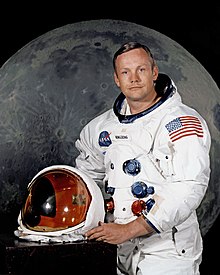 |
| Copyright NASA (C) |
Sunday, 3 June 2012
Venus Transit 6th June 2012
Everything you need to know about the forthcoming transit of Venus.
http://www.space.com/15978-venus-transit-faq.html
Unfortunately, from London UK only the third and fourth contacts can be seen, which will occur not long after sunrise.
http://www.space.com/15978-venus-transit-faq.html
Unfortunately, from London UK only the third and fourth contacts can be seen, which will occur not long after sunrise.
Saturday, 5 May 2012
Supershow of the Supermoon - Saturday 5th May 2012
Tonight's full Moon is special. It coincides with the closest approach of our nearest celestial neighbour. The combination of the Moon's closeness (called Perigee) and it being at full illumination means that its brightness is increased by 30% and its apparent size in the sky will increase by around 14%.
Supermoons dont often happen, the last one being in March 2011 last year. There were no increase in earthquake or tectonic activity as predicted by some who suggested that Supermoons cause such events.
Lets hope its clear to witness this special event.
Supermoons dont often happen, the last one being in March 2011 last year. There were no increase in earthquake or tectonic activity as predicted by some who suggested that Supermoons cause such events.
Lets hope its clear to witness this special event.
Sunday, 8 April 2012
Publish Phuturespace blog posts to Facebook and Twitter
I have just set up a link between my website blog with Facebook and Twitter.
Hopefully every post will be published on my wall.
Hopefully every post will be published on my wall.
Tuesday, 27 March 2012


Monday, 26 March 2012
Crescent Moon - Jupiter and Venus
Amazing how quickly the planets have swapped around in just two weeks. Now its the Moon's turn to be near Jupiter first before heading up towards Venus.
 |
| 24-03-12 18:50BST |
 |
| 24-03-12 18:51BST |
 |
| 25-03-12 20:15BST |
 |
| 25-03-12 20:16BST |
Wednesday, 21 March 2012
More Venus Jupiter Conjunction Images
 |
| venus-jupiter-11-03-12-18:43UT |
 |
| venus-jupiter-closeup-11-03-12-18:45UT |
 |
| venus-jupiter-11-03-12-19:14UT |
 | |
| venus-jupiter-18-03-12-20:02UT |
Saturday, 10 March 2012
Venus Jupiter Conjunction - Dance of the Planets in 2012
Over the next few weeks there is going to be some spectacular naked eye events in the western sky. Venus and Jupiter will make close approach on or around 12-13th March and by the end of the month the Moon and the Pleiades will be in the same area as the two planets. Follow the two planets diagonally downwards towards the horizon and you can see Mercury. Times are for 19:00 (UT). Location is from London, UK.
On the other side of the sky rising in the East is Mars. On the 4th April the Moon will be passing by the Red palnet.
Check out the skymaps of these events below. Screenshots courtesy of Carte du Ciel software.
On the other side of the sky rising in the East is Mars. On the 4th April the Moon will be passing by the Red palnet.
Check out the skymaps of these events below. Screenshots courtesy of Carte du Ciel software.
 |
| Sky Tonight March 10th- See if you can spot Mercury low in the west after sunset |
 |
| Venus-Jupiter Closest conjunction March 12th |
 |
| March 14th - after closest conjunction |
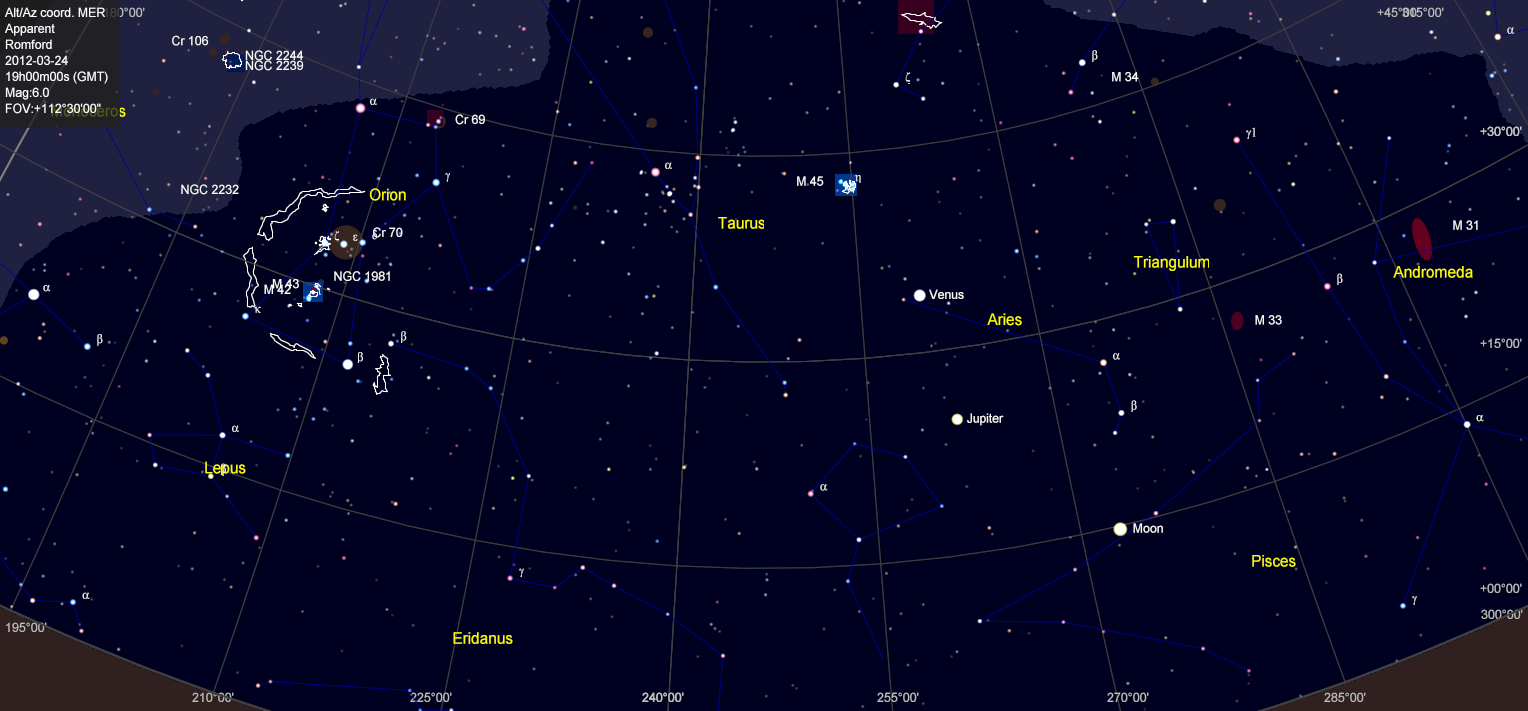 |
| Crescent Moon, Venus and Jupiter March 24th |
 |
| Pleiades (M45) Moon, Venus and Jupiter March 26th |
 | ||
| Moon and Pleiades March 27th |
 |
| Moon Mars April 4th |
Friday, 2 March 2012
Aurora from Iceland
Checkout these great images of the northern lights taken from Iceland by Ken Harrison of Loughton Astronomical Society.


Thursday, 1 March 2012
Raspberry PI - why I want one!
The huge hype of the latest tech gadget - the Raspberry PI hit the market today. Running on linux this little beasty aims to be used by schools and pc enthusiasts alike.
The little computer could be adapted to enhance telescope control, perhaps even a CCD camera. In any case its worth getting hold of one to try it out....assuming stocks are replenished sometime soon.
Available from RE Electronics and Designspark.
The little computer could be adapted to enhance telescope control, perhaps even a CCD camera. In any case its worth getting hold of one to try it out....assuming stocks are replenished sometime soon.
Available from RE Electronics and Designspark.
Saturday, 25 February 2012
Venus Moon Conjunction
Got a great image of the crescent Moon, Venus and Jupiter(top left).
This was taken with a Panasonic Lumix GF3 Compact System Camera @ 42mm, F6.3 Exposure 6secs at 800ISO.

This was taken with a Panasonic Lumix GF3 Compact System Camera @ 42mm, F6.3 Exposure 6secs at 800ISO.

New Meade Telescope Series LX80 and LX800
Meade have produced a new series of telescopes LX80 and LX800. First impressions of the LX800 at Astrofest this year, it looks as though Meade went back to the drawing board and had a complete rethink in what a telescope mount should look like.
The LX800 is a heavy duty mount that does not come cheap, it is almost $6000 (£6000). It comes with a built-in CCD camera which assists with the aligning and high precision tracking called StarLock(TM).
For more details see the Meade website. http://www.meade.com/lx800.
The LXD80 on the other hand is designed for the intermediate astronomer. Prices start from $799 (£799). The design is based upon what I can only describe as a 'square block'. The iOptron is similar in design.
The mount can be elevated at an angle to turn it from an altaz mount to an equatorial. The Meade AudioStar(TM) is included.
These telescopes are certainly a far cry from the LXD series which have been going for ten years. It will be interesting to see how many telescope owners will swap their old LXD/ETX models for this one. I am certainly considering getting the mount alone which is available. For more details see http://www.meade.com/lx80
Check out a preview of the LX80 on YouTube.
The LX800 is a heavy duty mount that does not come cheap, it is almost $6000 (£6000). It comes with a built-in CCD camera which assists with the aligning and high precision tracking called StarLock(TM).
For more details see the Meade website. http://www.meade.com/lx800.
The LXD80 on the other hand is designed for the intermediate astronomer. Prices start from $799 (£799). The design is based upon what I can only describe as a 'square block'. The iOptron is similar in design.
The mount can be elevated at an angle to turn it from an altaz mount to an equatorial. The Meade AudioStar(TM) is included.
These telescopes are certainly a far cry from the LXD series which have been going for ten years. It will be interesting to see how many telescope owners will swap their old LXD/ETX models for this one. I am certainly considering getting the mount alone which is available. For more details see http://www.meade.com/lx80
Check out a preview of the LX80 on YouTube.
Saturday, 18 February 2012
Astrofest 2012

For images of the event click here.
I attended both days with tickets for all four lecture sessions so I could cherry pick the lectures I really wanted to see. In the end I managed to see at least two lectures from each session, including the whole of the Saturday morning session.
Lectures spanned across both days were split into four sessions. Topics were varied and included Stars and the Sun, Climate Change, Cosmology, Lunar exploration, Extrasolar planets and even the discovery of an object named Hannys Voorwerp! However, I would have to say that Solar astronomy was the most prominent theme in this year's series of lectures.
Lecturers included Noah Pedro, Dr Lucie Green, Dr Stuart Clark, Carlos Frenk, Hanny van Arkel, Dr Allan Chapman and journalist and science popularist Simon Singh. Unfortunately former Member of Parliament Lembit Opik could not make it due to personal commitments.
The quality of talks this year were excellent. I especially liked Dr Stuart Clark's talk giving a historical account of the 'alleged' connection between Solar activity and the changes in Earth's climate. Hanny van Arkel's talk about her serendipitous discovery of a new object in the Universe was an inspiration for all those thinking of signing up to the social network website 'Zooniverse'.
It was the first time I have ever attended a talk by Simon Singh. It was about the Big Bang which by coincidence was the title of one of his books, that was published a little while ago. It was very good and informative...he even did a physics experiment on the stage where he 'electrocuted' a gherkin. His anecdotes were extremely funny especially about his encounter singer-songwriter Kate Meluah. At the end of the talk Simon Singh was signing his books. In fact the queue was so long he (actually I think it was Ian Ridpath) had to run to his car to get more of his books!
As usual early on the saturday afternoon there was a book signing frenzy which seems to nowadays become somewhat of an Astrofest tradition. This year it was the turn of John Mason, Patrick Moore and Brian May. Brian May has made a regular appearance every year since 2007. It took about an hour in the queue to get to the room where the three was signing their books. I got Brian to sign the latest Queen book which celebrate 40years of the band in the music industry.
The sky at night team were also there, Paul Abel, Peter Lawrence and celebrity impressionist extraordinaire John Culshaw who makes a regular appearance on the show as he has an interest in Astronomy. (off topic!) John Culshaw does a great impression of my cousin Robert Peston. So when I introduced myself to him he immediately launched into an impression of Robert! It was genuine pleasure to meet him.
This year I had a list of items I wanted to purchase, unfortunately I only ended up with one item which was a Vixen two inch 42mm Lanthanum wide-field eyepiece. However, I did end up purchasing several books and getting them signed by the authors Dr Stuart Clark, Simon Singh and Brian May.
Once again both days seem to fly by so quickly. On the whole it was a great Astrofest and am already looking forward to next year's event.
Subscribe to:
Posts (Atom)